
How to size a tankless unit for your house
Sizing starts with two numbers: the flow you want at once and the temperature rise the unit must deliver. Temperature rise is the difference between the incoming water temperature and the desired output, which the Department of Energy sets at about 120 degrees for most uses.
Fixture flow rates are useful reference points. DOE guidance lists a shower at about 2.5 gallons per minute, a kitchen sink at 2.5, a dishwasher at 1.9 and a bathtub at 2.4 to 4. Add the fixtures that may run together, then compare to a manufacturer's flow table at your local incoming water temperature.
| Input | Example from DOE guidance | Why it matters |
|---|---|---|
| Shower flow | About 2.5 gpm | Sets the minimum flow for a single bath |
| Simultaneous use | Shower plus dishwasher | Pushes you toward a larger unit or two units |
| Temperature rise | Output near 120 degrees minus incoming temperature | Higher rise lowers the flow a unit can deliver |
| Fuel | Gas or electric | Decides gas line, venting and electrical load |
What your home needs for a tankless install
DOE building guidance notes that a gas tankless unit adds 175,000 Btu or more to a home's gas load and in most cases needs a three-quarter inch gas line. In a retrofit the gas line serving the house may need to be larger. Electric units usually need 208 or 240 volts and substantial amperage, depending on the size of the unit.
Venting must use only products listed for the specific unit. On a swap from a tank, those site checks are where the real cost and schedule are decided.
Repair, flush and descale
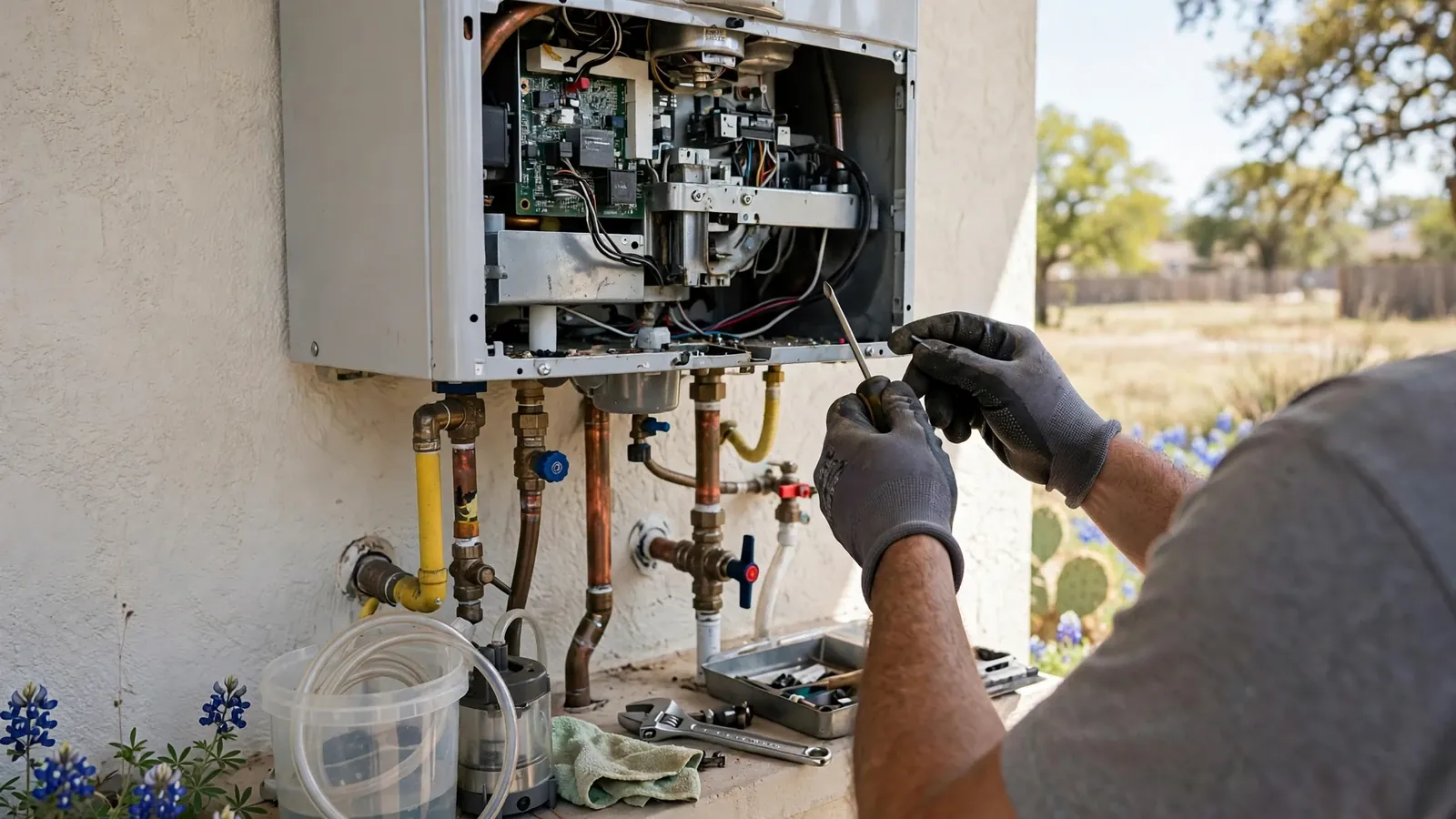
A tankless unit that shows an error code, delivers cold water between bursts or has weak flow may need a cleaning more than a repair. Mineral scale can coat the heat exchanger, and a descaling flush with a pump and cleaning solution restores flow.
Many calls that begin with a tankless problem turn out to be a clogged inlet screen, a venting fault or a condensate drain issue. We diagnose before suggesting replacement, and we are honest if the unit is a brand we do not service.
Tankless unit acting up? Call and describe the error code.
Call (425) 845-0257Issaquah water and tankless care
The City of Issaquah's 2021 water quality report lists hardness in its well water at roughly 3 to 6 grains per gallon by standard conversion, with regional water from the Cascade Water Alliance also in the mix. That is not extreme, but scale still builds inside a heat exchanger over time. Test your tap or ask your utility for its current report, and plan on an annual flush.
What changes the cost of a tankless installation or service
A larger gas line or a new electrical circuit is often the biggest part of the project.
Venting must match the unit and the home. A long run or a roof penetration adds labor.
Higher-flow units cost more, and larger homes may need two.
Scale protection or a flush setup adds a small amount of work and helps the unit last.
A flush, a part replacement and a diagnostic visit are each different scopes.
DOE guidance says tankless units can last up to 20 years versus 10 to 15 for tanks, but the real life depends on water, use and maintenance. Want your real number? Call (425) 845-0257.
Where tankless fits with other water heater work
If your existing tank is leaking, water heater replacement may be the faster fix. If you are weighing a tank repair, see water heater repair. For installs in new construction, water heater installation covers placement. Sammamish homes can call through the Sammamish page.
It depends on usage and your site. Endless hot water and wall space savings are real benefits, but gas line, venting and electrical needs can raise the install scope. We walk through your numbers before recommending it.
Short draws may not trigger the burner, or a clogged inlet screen or mineral scale may restrict flow. A flush and a screen check often fix it.
Manufacturers generally recommend a yearly flush, and the right interval depends on your water. We set the schedule at the first visit.
Yes, for most common brands. We check the model before the visit and tell you if we cannot service it.
Gas work follows safety rules on venting, shutoffs and combustion air. If you ever smell gas, leave the house and call 911 from outside.
Planning tankless? Call and we will size it with you.
Call (425) 845-0257What to do before we arrive
- Do not run the unit if it shows an error code and smells of gas. Leave the building and call the gas utility.
- Write down the error code on the display.
- Shut off the water to the unit if it is leaking.
- Note which fixtures lose hot water and when.
Standards and sources for tankless water heater
Our sizing notes draw on the Department of Energy's tankless guidance, which cites a lifespan of up to 20 years and typical gas inputs near 175,000 Btu. Installation follows the Uniform Plumbing Code as adopted in Washington.