
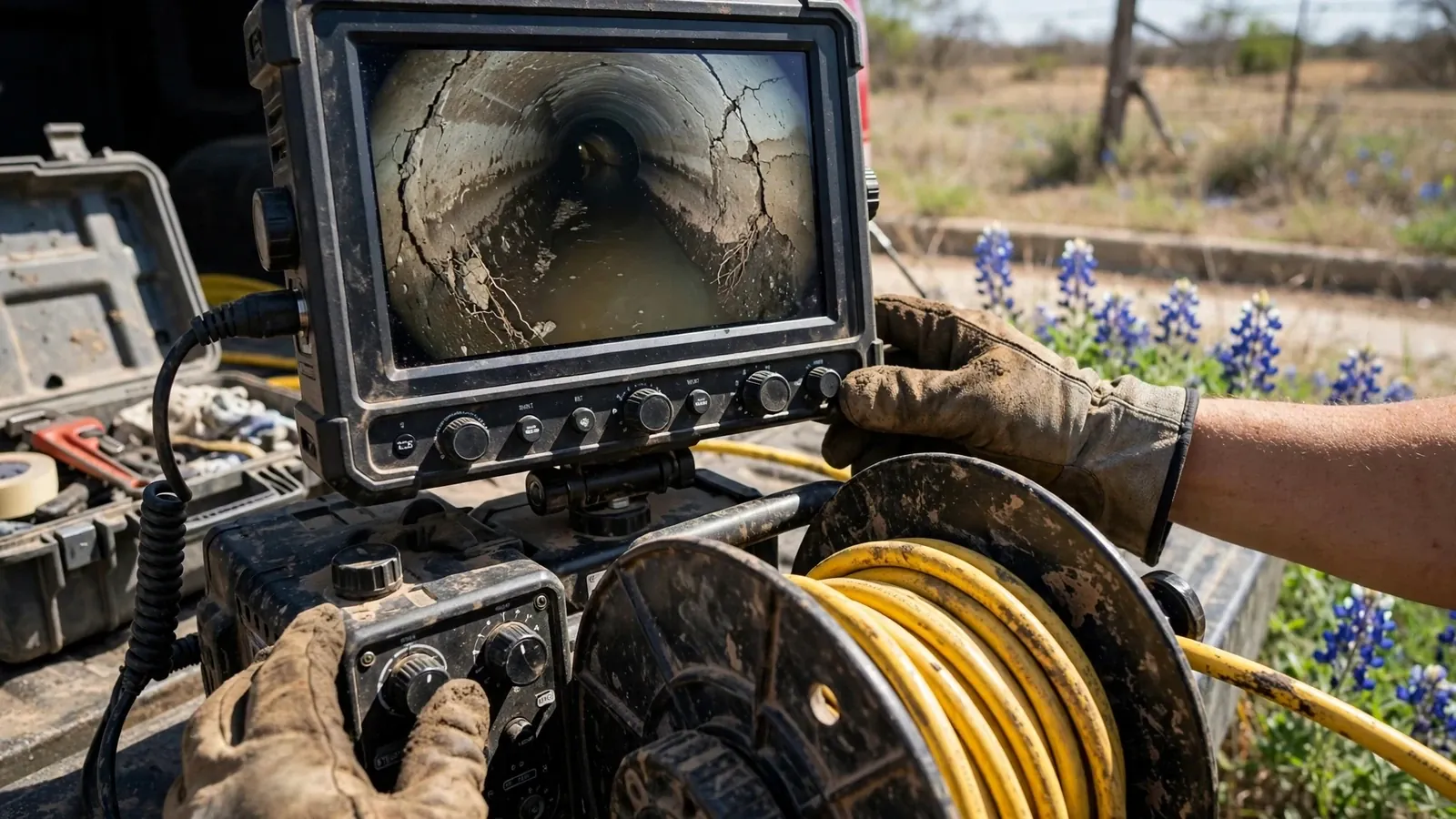
When a camera inspection is worth it
- Before buying a home, to see the condition of a pipe you cannot see.
- After a clog returns within weeks of cleaning.
- When a yard has soggy patches or a sewer smell.
- Before landscaping, remodeling or adding fixtures that load the sewer line.
- Before a lining or repair decision, so the scope is based on what is actually in the pipe.
What the camera can find
| Finding | What it means | Likely next step |
|---|---|---|
| Root intrusion at a joint | Roots entered through an opening | Cut roots, then lining or a spot repair |
| Offset joint | Two pipe sections are out of alignment | Spot repair or lining depending on severity |
| Belly or sag | A low spot holds water and waste | Excavate and regrade, or monitor if minor |
| Cracked or broken pipe | Structural damage to the wall | Repair by excavation, lining or bursting |
| Scale or grease buildup | The pipe has narrowed | Hydro jetting and maintenance |
| Corroded cast iron | Pipe wall thinned by rust | Section replacement |
How an inspection works
Locate access
We find the cleanout. If there is none, we use a toilet or roof vent.
Run the camera
The camera moves along the line and we view the picture live.
Mark the location
A locator finds the depth and position of any problem above ground.
Review the findings
We explain what we saw and give repair options with ranges of scope.
We do not recommend work that the camera does not support. If the pipe is sound, we say so.
Buying a home near Issaquah Creek or the hills
If you are buying in Issaquah, a camera look is a useful addition to a standard home inspection. A routine inspection does not see inside a buried sewer line, and the line is the owner's responsibility under the City of Issaquah's side sewer rules. Surprises show up as backups after move-in, not at the inspection table.
Homes close to the creek corridor, which King County lists as an urban flood hazard area, may have older lines and settled soil. Older Olde Town neighborhoods are a good candidate for a pre-purchase camera look, and so is any property with large mature trees.
Planning a purchase or tracking a recurring clog? Call to book an inspection.
Call (425) 845-0257What changes the cost of a sewer inspection
A working cleanout is the easiest path. Pulling a toilet or working through a vent takes more time.
Longer lines take longer to scan.
A heavily clogged pipe may need cleaning before the camera can pass.
Finding the problem depth and marking it above ground adds time.
A recorded video and a written summary are separate deliverables.
Insurers rarely pay for inspections, but a recorded video can help document a claim for a sudden failure. Want your real number? Call (425) 845-0257.
Where an inspection leads
If the camera finds a damaged pipe, sewer line repair is the next step. If it finds buildup only, sewer line cleaning or drain cleaning is the answer. Sammamish buyers can call through the Sammamish page.
Many inspections take under an hour once access is found. Longer or blocked lines take more time.
We can record the inspection and review it with you. Ask when you book if you need it for a purchase or an insurance record.
A fully blocked line may need clearing first so the camera can pass. We explain the sequence on the call.
We can enter through a toilet or a roof vent. We may also recommend installing a cleanout, since it makes every future service easier.
It is optional but sensible. The sewer line is buried and unseen at a normal inspection, and repair costs can be substantial.
Want to see inside your sewer line? Call to book.
Call (425) 845-0257What to do before we arrive
- Stop running water, laundry and dishwashers if drains are slow.
- Do not pour chemical drain cleaners into a line that will be inspected.
- Keep people away from standing sewage and wash hands afterward.
- Locate your cleanout if you can, since access speeds the camera run.
Standards and sources for sewer inspection
The City of Issaquah says the property owner maintains the side sewer, which is why a recorded camera inspection is useful before a purchase. Washington adopts the Uniform Plumbing Code under WAC 51-56 for sewer work.