
A newer neighborhood, and what its age does and does not tell us
Issaquah Highlands sits on the western half of Grand Ridge, north of downtown Issaquah, with Interstate 90 as its southern boundary. Ground was broken in September 1996 and the first homes were finished in 1998, so the housing here is a few decades old at most.
Age alone does not tell a plumber what is behind a wall. We do not assume a pipe material or a failure from a build date. We look at the fixtures, the shutoffs and the symptoms when we get there.
Attached homes: whose pipe is it?
The county-approved plan from 1995 called for about 60 percent of Highlands homes to be townhomes, condominiums or apartments, although the build-out plan has since changed. Attached housing raises a practical question the moment water appears. Which pipe is yours, and which belongs to the building or the association?
General guidance: who usually handles what
- A fixture, supply line or drain inside your own unit is normally yours to repair.
- Shared risers, shared drain stacks and common-area lines are normally handled by the association.
- Your governing documents decide the line, so read them or ask your manager before you pay for a repair.
When water shows up in an attached home
Shut off your water
Close the shutoff under the fixture or the main shutoff for your unit if water is spreading. Find these before you need them.
Tell the people affected
Knock on the door below and send a message to your manager. Water travels, and early notice limits the damage.
Photograph everything
Take photos and video of the source, the wet surfaces and any damaged belongings for your insurer.
Call a plumber
Give your street, your unit and what you see. A plumber can tell you whether the fault is in your unit or in a shared line.
Water supply in the Highlands
According to the city's 2021 water quality report, the Highlands and neighboring Talus are normally supplied by the Cascade Water Alliance. That regional water arrives through Seattle's system, fed by the Tolt and Cedar river watersheds. During planned or unplanned infrastructure work, the report says, these areas can instead receive Issaquah's own groundwater.
For a homeowner, the takeaway is practical. Your tap water can change briefly during utility work, and the current city report is where to check the source and test results. We do not quote a hardness number for the Highlands, because the report does not list one for regional supply.
Giving us your location
Highlands Drive is the main arterial. Swedish Medical Center opened here in 2011, Grand Ridge Elementary opened in 2006, and the park and ride built in 2006 has about 1,000 stalls. Landmarks help when an address is hard to find, but your street and building number are what we use to confirm a visit.
| Situation | What to check first | Page |
|---|---|---|
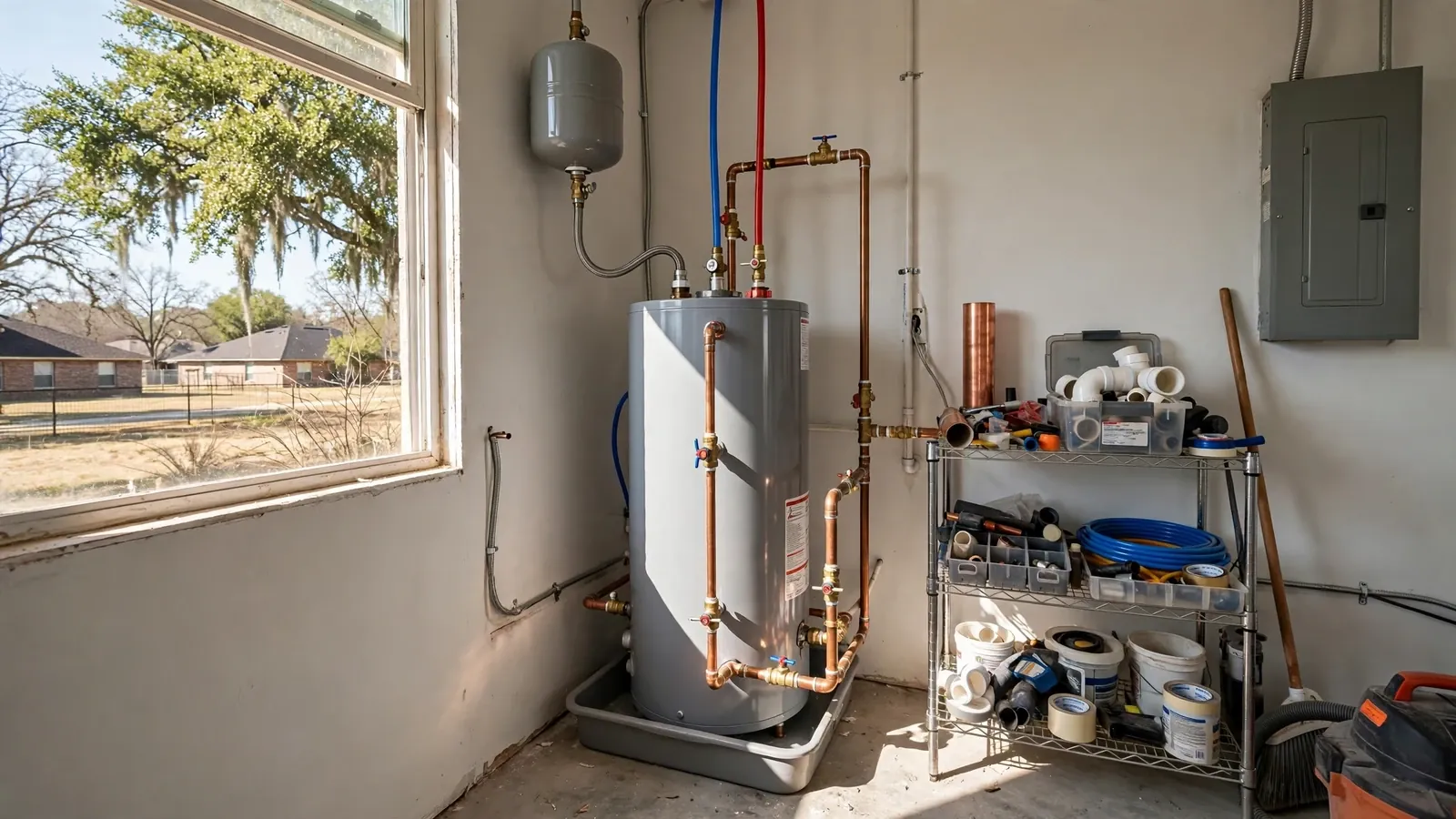
| Water heater in a closet or utility room | Age, leaks at the base, and whether the shutoff works | Water heater replacement |
| A stain or drip on a ceiling or wall | Whether the source is your unit or a neighbor's | Leak detection |
| A drain that keeps slowing down | Whether one fixture or the whole line is affected | Drain cleaning |
| A split or sprayed supply line | Closing the shutoff before anything else | Burst pipe repair |
Plumbing problem in the Highlands? Call and give us your street.
Call (425) 845-0257Yes. The Issaquah City Council approved annexation of the Grand Ridge area in May 1996, so Highlands addresses are city addresses. That matters for who handles a sewer manhole or a city water question. Call the city's Public Works line at 425-837-3470 for those.
Usually the repair of the failed pipe belongs to whoever owns that pipe, and your association rules say whether it is a unit pipe or a shared one. Tell your manager and the neighbor right away, close your own shutoff if water is entering your unit, and photograph the damage for your insurer.
Under normal conditions the Highlands gets regional water from the Cascade Water Alliance, per the city's 2021 report. Groundwater from city wells is possible in unusual cases such as infrastructure work. The city's newest report is the place to confirm the source and read test results.
Issaquah appears on the MyBuildingPermit tip sheet of permits required and not required. Sink and toilet swaps that do not change plumbing lines are listed as not needing one, while tub and shower replacement does. Water heaters and gas piping are listed separately, so confirm with the City of Issaquah before you book the work.
The state's Labor and Industries department publishes a free verification tool at secure.lni.wa.gov/verify. You can search by business name, owner name or license number, then see whether the contractor is registered and whether a plumber holds a Washington certification. Do that lookup yourself before anyone starts work.
Where these facts come from
Development dates, the developer, the southern boundary, annexation and the landmark dates come from a public encyclopedia summary of Issaquah Highlands. The water source and the unusual-circumstances note come from the City of Issaquah 2021 water quality report. Permit and contractor lookup details come from MyBuildingPermit.com and Washington Labor and Industries. Neighbors nearby are covered on our Talus and Olde Town pages.
Source type: public encyclopedia, City of Issaquah, MyBuildingPermit.com, WA L&I