
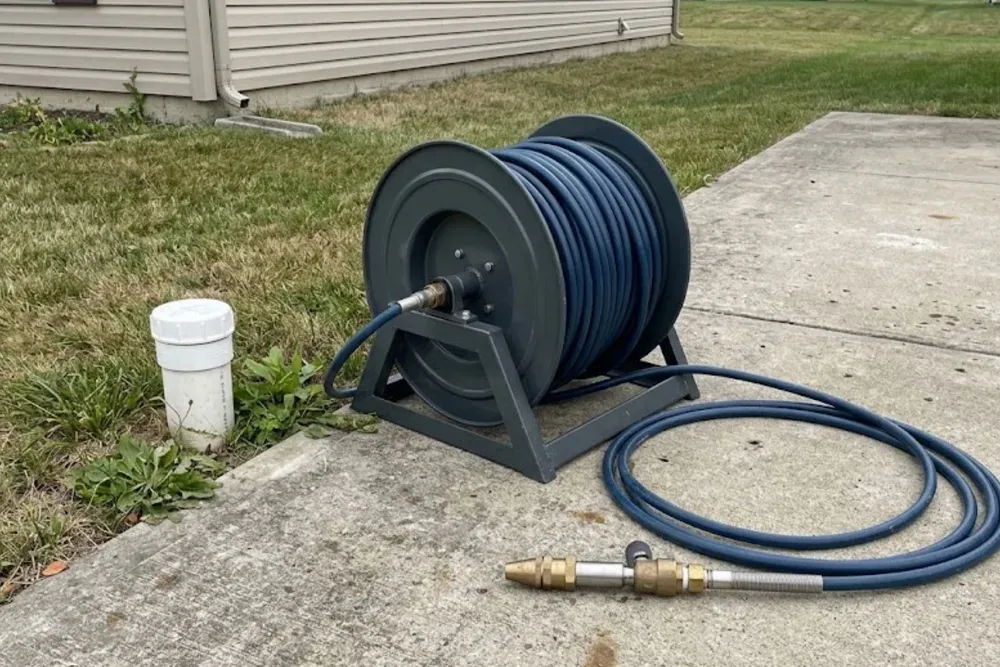
How hydro jetting works
A jetter pumps water through a flexible hose to a nozzle. Jets on the nozzle push it forward and send streams back toward the hose, scouring the pipe as it moves. The water carries debris toward the cleanout or main.
The operator works in passes, farthest point first, and often follows with a camera look to confirm the pipe is clean.
Jetting compared with snaking
| Feature | Cable (snake) | Hydro jetter |
|---|---|---|
| What it does | Bores a hole through a clog | Scours the whole pipe wall |
| Best for | Single clogs and quick relief | Grease, scale and recurring blockages |
| Leaves behind | A coating on the wall | A cleaner pipe |
| Pipe condition | Tolerates most pipes | Needs a sound pipe |
| Speed | Quick for simple clogs | Longer, more thorough |
Many visits use both. A cable restores flow quickly, and a jetter finishes the job. Our hydro jetting page describes the service, and drain cleaning covers the first-response methods.
When jetting is the right choice
- A line clogs again within weeks of cable cleaning.
- A camera shows grease or scale narrowing the pipe.
- A restaurant or kitchen line carries heavy grease.
- Fine roots have entered a joint, and the pipe is otherwise sound.
- You want a preventive cleaning for an older line.
When it is not
Jetting cannot fix a broken pipe, a collapsed section or a deep sag that holds water. In an old clay or cast iron line with cracks, high pressure can make damage worse. That is why a camera look often comes first.
If the camera shows damage, the answer is repair, and sewer line repair explains the options.
Nozzle types and why they matter
Jetting nozzles are not all the same. A forward-facing nozzle bores through a heavy blockage, while a nozzle with rear-facing jets pulls the hose forward and scours the pipe wall as it moves. A rotating nozzle spreads a cleaning pattern around the full circle of the pipe.
A plumber chooses the nozzle by pipe size, material and the type of buildup. Fine roots call for a different tip than grease. The pressure setting also matters, and a careful operator starts lower on older pipe and works up only as needed.
Preparing your home for a jetting visit
- Clear the area around the cleanout and any floor drain.
- Remove rugs and items from a basement or garage near the line.
- Tell the plumber about earlier backups and prior repairs.
- Keep pets and children away from the work area and the hose.
How often do homes need it
Most single-family homes never need regular jetting. They need it when a line clogs repeatedly or when a camera shows heavy buildup. Homes with large mature trees near the sewer line may need it more often if roots keep returning.
Commercial kitchens are different. Grease builds steadily, and a schedule of cleanings keeps lines clear. Ask your plumber to recommend an interval based on what the camera shows, not on a fixed calendar.
Questions to ask the plumber
- Will you inspect the line with a camera before and after jetting?
- What pressure will you use on my pipe material?
- How will you handle water that backs up into fixtures?
- What do you recommend if the camera shows damage?
- Is a follow-up cleaning schedule needed?
A plumber who answers these clearly is likely to be careful with your pipes. A camera view after cleaning is the best proof that the line is actually clear.
After the visit, keep the camera footage or the plumber's notes. If the line clogs again, they show where the problem sits and what was already done, which makes the next decision faster and keeps you from paying for the same diagnosis twice.
Side sewers and who owns what in Issaquah
The City of Issaquah describes the side sewer as the pipe connecting your building to the sewer main in the street, and says property owners are responsible for maintaining and repairing it. The city is responsible for mains in public rights of way and in utility easements dedicated to it.
For a backup involving a city sewer manhole, Public Works takes calls at 425-837-3470 during business hours and 425-837-3200 after hours. If only your house is affected, the cause sits on your side, and jetting plus a camera will show it.
Source type: City of Issaquah Public Works pages on side sewers and backups
What to expect during a visit
The plumber finds a cleanout or creates access, runs the jetter in passes and flushes debris. Water may back up briefly into a fixture, so clear items off the floor near drains.
Afterward, run water to confirm flow. If there was heavy buildup, the plumber may suggest a schedule, such as an annual cleaning for a grease-prone line.
Jetting a side sewer in Sammamish depends on which district owns the main, and our Sammamish page explains the split. The service area page lists the places we reach.
Want your line jetted? Call (425) 845-0257.
Call (425) 845-0257No. A city main or manhole problem is handled by Public Works. Jetting cleans your side sewer and branch lines. If neighbors are affected too, call the city.
The pump runs like a pressure washer. It is noticeable but short.
On sound pipe, no. On cracked or collapsed pipe it can, so a camera look is wise.
A grease-prone commercial line may need a schedule. A home line often needs it once, plus better habits.
It clears fine roots. If the pipe is cracked, roots return, and a repair is the lasting answer.