
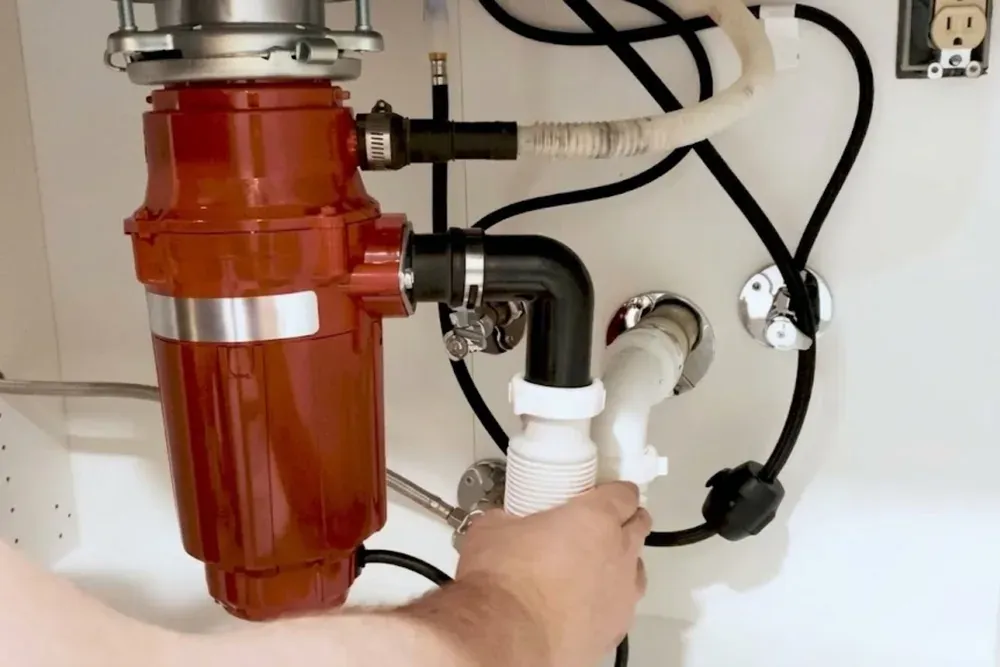
What you need before you start
- A disposal sized for your household, with enough horsepower for your use.
- A sink drain opening of the standard size, plus the mounting hardware that comes with the unit.
- A nearby outlet or a switch that can power the unit, since many homes lack one.
- A dishwasher drain connection plan, if a dishwasher shares the sink.
- Plumber's putty, a drain trap kit and a pan for the water in the old trap.
Check the cabinet space first. A larger disposal needs more clearance under the sink than a standard unit, and a cramped cabinet changes how the trap lines up.
The installation sequence
Turn off power and water
Switch off the breaker for the sink area, close the angle stops and empty the cabinet.
Remove the old drain
Disconnect the trap and the old sink strainer, and clean the opening.
Mount the flange
Press a ring of putty under the new flange, then fasten the mounting ring and tighten evenly.
Hang the unit and connect the drain
Lock the disposal onto the mount, connect the discharge and the dishwasher hose, and rebuild the trap.
Test
Restore power, run water and check every joint for drips before using the grinder.
Where installs go wrong
| Mistake | What happens | Fix |
|---|---|---|
| Dishwasher knockout plug left in place | Dishwasher does not drain | Remove the plug from inside the disposal inlet |
| Uneven mounting ring | Leak at the flange | Loosen, reseat the putty and retighten evenly |
| Trap misaligned | Slow drain or leak at the joint | Cut and fit the trap to the discharge height |
| No power switch or a loose wire | Unit does not run or trips the breaker | Have an electrician or plumber complete the hookup |
| Overtightened fittings | Cracked plastic and leaks | Replace the part and tighten by hand plus a quarter turn |
A leak under the sink often shows after the first dishwasher cycle, not during the test. Run the dishwasher and watch the connections once before you call the job done.
Do it yourself or hire a plumber
Swapping an existing disposal for a similar one is a reasonable weekend job. Adding a disposal where none existed is a bigger one. It means a new electrical connection, often a new switch, and changes to the drain that can affect venting and drain slope.
A plumber is the right call when the drain line is old or slow, when you need the dishwasher moved, or when any wiring is involved. Our garbage disposal repair and installation page explains what a service visit covers.
Choosing between continuous feed and batch feed
Continuous feed units run while a wall switch is on and accept scraps as you rinse. Batch feed units run only when a stopper is locked in place, which suits households with small children. Both fit a standard sink opening, though the batch type needs a different sink flange and stopper, so decide before you buy.
Finally, keep the installation instructions and the manufacturer's contact details. Disposals have warranties that depend on correct installation, and the paperwork makes any later claim straightforward.
Local rules to know in Issaquah
The MyBuildingPermit.com tip sheet, which covers Issaquah, says kitchen fixture replacements do not need a permit when they do not modify plumbing lines. Adding a disposal can touch the drain line, and new wiring is a separate question, so ask the City of Issaquah permit center about your project before you start.
Also know who handles a backup. The City of Issaquah says homeowners are responsible for sewer backups on private property. If your kitchen line backs up after a disposal install, the cause may be the branch line, and drain cleaning is the next step.
Source type: regional permit tip sheet covering Issaquah and the City of Issaquah sewer backup page
Care after installation
Run cold water while the disposal works and for about fifteen seconds afterward. Skip grease, fibrous scraps and large amounts of rice or pasta. Cut up citrus peels, which also freshen the chamber.
If the unit jams, switch it off, do not reach into it, and use the hex socket at the bottom to free the plate. A repeat jam or a hum without motion is a sign the unit needs attention.
Homes across the Sammamish Plateau face the same sink-cabinet questions, and the Sammamish emergency plumber page explains how we dispatch there. The service area page lists every place we cover.
Want a plumber to handle the install? Call (425) 845-0257.
Call (425) 845-0257A fixture swap that does not change plumbing lines generally does not, according to the regional tip sheet that covers Issaquah. Adding wiring or altering the drain can change that, so ask the City of Issaquah permit center about your specific project.
A straight swap often takes a couple of hours. A new install with wiring and drain changes takes longer.
A larger household or heavier use favors more horsepower. A small household with light use can do well with a smaller unit.
Yes, though the trap setup is different. The disposal sits on one basin and the other drains into a tailpiece that joins it.
Check that the knockout plug was removed and that the hose is looped high as the unit's instructions say. If it still fails, call a plumber.