
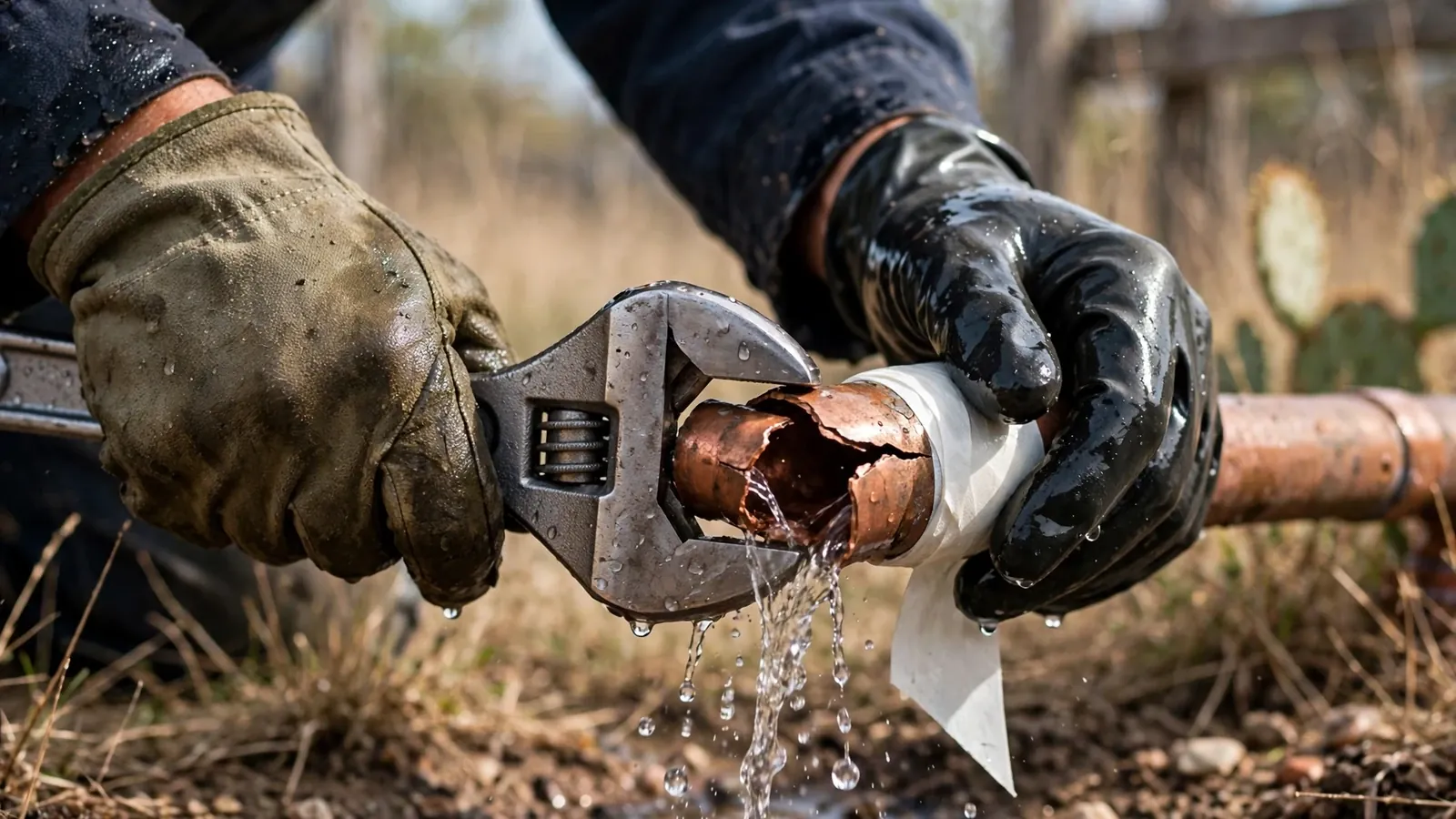
Side by side
| Factor | Copper | PEX |
|---|---|---|
| Freeze tolerance | Can split when water freezes | Handles some expansion, not freeze-proof |
| Install effort | Cut, fit and solder each joint | Flexible tubing with crimp, clamp or expansion fittings |
| Wall openings | Often more, since pipe is rigid | Often fewer, since tubing bends |
| Exposed runs | Fine in a mechanical room | Needs protection from sunlight |
| Water chemistry | Can corrode in aggressive water | Not affected the same way |
| Noise | Can tick as it expands | Quieter in many layouts |
| Repair | Cut and couple or solder | Cut and couple with a fitting |
Neither is always better. A plumber who has seen your walls and your water can recommend one for your layout. Our repiping page explains the process in either material.
Cold snaps and the Issaquah climate
Hard freezes are not routine here, but they happen. Issaquah had a snowstorm lasting almost two weeks before the January 2009 creek flooding. In a cold snap, pipe in an attic, exterior wall or unheated crawl space is the first to fail.
PEX tolerates some expansion when frozen, which is an edge. Copper in a protected, insulated location performs well. Either material needs insulation in cold areas, and neither replaces it.
Your water matters
The City of Issaquah's 2021 water quality report lists well hardness at about 3 to 6 grains per gallon by standard conversion. Hardness is not the same as corrosiveness, and the report does not rate copper corrosion for your street. Water source can vary across neighborhoods, since the city also buys regional water.
If you have a history of pinhole leaks in copper, ask your plumber to look at the pattern and the pipe. That informs the decision more than any general rule.
Cost and disruption
PEX often costs less in labor, and copper often costs more in materials. The real difference is how much wall has to be opened. Ask for a plan that shows where each pipe will run, and compare the patching scope.
For a deeper look at the cost side, see our burst pipe repair page if you are repairing now and repiping later.
Fittings and the water heater connection
Where pipe meets the water heater, many installers use a short metal section or a rated connector so plastic tubing is not exposed to the heater's heat. This is a common reason repipes use copper at the heater and PEX in the walls.
Fittings are the part of a repipe that most often cause leaks. Copper joints depend on clean, well-heated solder. PEX joints depend on the right tool and the right ring. In both cases a pressure test before walls close is the best proof of a good job.
Questions that settle the choice
- Do your walls allow rigid pipe to be routed without many openings?
- Is the pipe going to be exposed anywhere?
- Have you had pinhole leaks in copper before?
- Will the house sit through cold snaps with unheated areas?
- What warranty does the installer offer on labor and fittings?
How each material behaves over decades
Copper is a metal that forms a protective layer inside the pipe in many water supplies, and that layer is why it can last for decades. In some water it can pit instead, which shows up as pinhole leaks. If you have seen pinholes, ask what the pattern looks like before choosing the same material again.
PEX does not corrode, but it has other limits. Sunlight damages it, certain chemicals can attack it, and poor fittings leak. A careful installer avoids all three by protecting the tubing, using the right fittings and testing the system.
Neither material is a guarantee. The quality of the installation and the water in your house matter as much as the pipe itself.
What each choice does to the walls
Rigid copper needs straight runs and clear paths, so a plumber may open more of the wall to route it. Flexible PEX can snake through framing with fewer openings, which keeps patching lower. In a house with plaster or tile you want to keep, that difference can decide the whole project.
Ask for a simple sketch of the planned routes. If a plumber can show where each line will run and how many openings that takes, you can compare materials by the work they actually create.
Whichever material you choose, ask for isolation valves at the main and at each bathroom group. They cost little during a repipe and make every later repair faster, because you can shut off one area without losing water to the whole house.
Checks for Issaquah homeowners
Washington's Department of Labor and Industries runs a lookup at secure.lni.wa.gov/verify. You can check a plumbing contractor's registration, whether lawsuits have been filed against its bond, its workers' comp status and whether a tradesperson is certified in Washington. Use it before hiring for a repipe.
Permit and inspection rules depend on the project, so ask the City of Issaquah permit center about yours.
Source type: Washington L&I lookup page and City of Issaquah 2021 water quality report
Homes on the Sammamish Plateau choose between the same two materials, and the Sammamish page tells you how to reach us from there. See the service area page for our full coverage.
Choosing a material? Call (425) 845-0257.
Call (425) 845-0257PEX tolerates some freeze expansion, but insulation is the real protection in either material.
Yes, with proper transition fittings. Many repipes use PEX in walls and copper at the water heater.
Both can be repaired by cutting out a section and coupling. Access to the pipe matters more than the material.
Manufacturers publish warranties for both, and the real life depends on water, install and conditions.
Buyers generally accept both. A documented, inspected repipe is a positive either way.